April 9, 2026
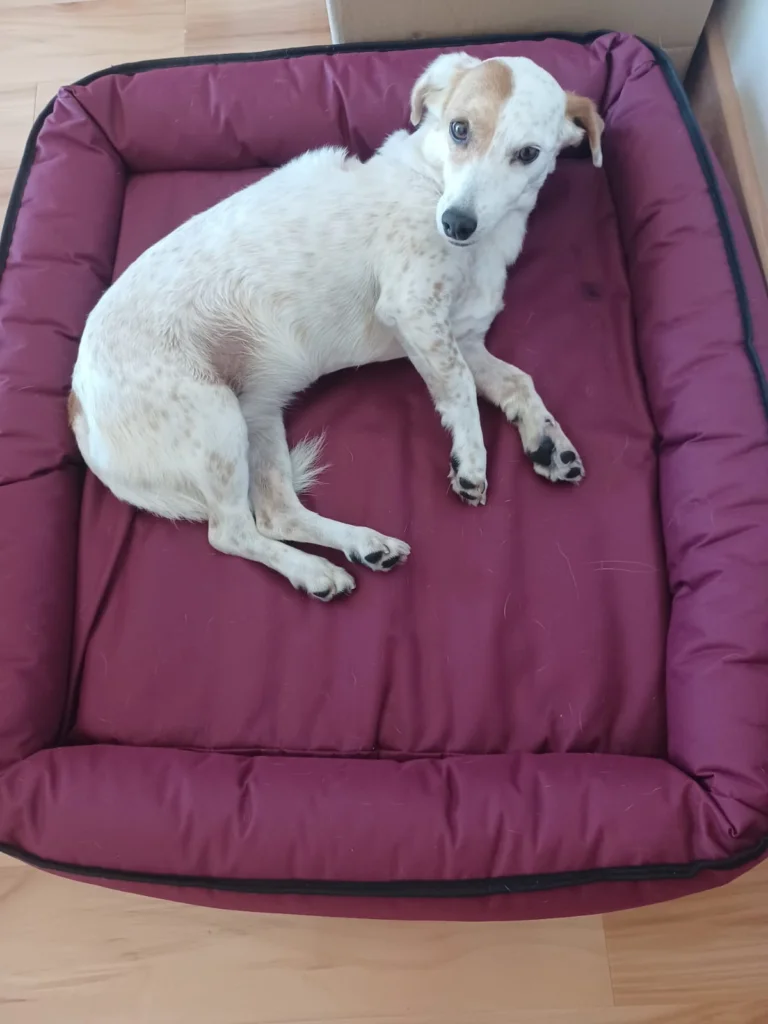
Do senior dogs need a special mattress? In Loli’s case, the magnetic mattress brought more comfort and a better adaptation to rest.
As dogs age, it is common to observe changes in their behavior that often go unnoticed. Some begin to take longer to lie down, others avoid staying in their own bed, move around frequently, or show discomfort when getting up. These signs, often attributed solely to aging, reveal something more specific: the need to adapt the environment to the body’s new conditions.
Among the aspects that most influence quality of life at this stage is the resting place. It is where the body reorganizes, where joints relieve the pressure accumulated throughout the day, and where the dog restores energy. Therefore, understanding whether senior dogs need a special mattress is not just a matter of curiosity — it is a decision that directly impacts well-being.
Do senior dogs really need a special mattress?
Over time, there is a natural reduction in muscle mass, increased joint sensitivity, and a decreased ability to absorb impact. The body becomes more vulnerable to direct contact with hard or inadequate surfaces. Beds that are too thin, sink excessively, or fail to distribute weight evenly can intensify discomfort.
In this context, using an appropriate mattress is no longer a minor detail but a coherent response to the needs of aging. Proper support promotes body alignment, reduces pressure points, and facilitates simple movements such as lying down and getting up.
What is the best type of bed for senior dogs?
Choosing the ideal bed involves observing characteristics that truly influence comfort and functionality in everyday life:
High-density foam that supports weight without excessive sinking;
A stable surface that allows the dog to position itself safely;
Appropriate height, avoiding effort when getting on or off;
Comfortable material that maintains a pleasant temperature;
A structure that promotes even weight distribution.
Among the available options, orthopedic beds stand out, and in some cases, mattresses with magnetic technology may contribute to a more comfortable rest depending on the dog’s individual sensitivity.
If you would like to explore some alternatives, you can view models available on the market that have been well rated by pet owners, especially in situations involving comfort and support during rest: https://amzn.to/48BIgnD
Signs That Your Dog Needs a Better Bed
Some behaviors indicate that the resting place is no longer adequate:
Takes longer to settle or to get up;
Avoids staying in its own bed;
Moves from place to place repeatedly;
Prefers lying on the floor;
Shows restlessness during rest.
When carefully observed, these signs help reveal that small environmental adjustments can lead to significant improvements in comfort.
What We Learned in Practice with GOE and Loli
Direct experience with dogs in the aging process allows us to observe nuances that often do not appear in technical descriptions.
In GOE’s case, there was a significant limitation in mobility, with difficulty positioning himself and greater effort when lying down. Introducing an orthopedic bed provided more consistent support, making it easier to adjust his body and reducing the effort required to find a comfortable position. As a result, rest became more stable and less physically demanding.
With Loli, who presents a broader sensitivity — including aspects related to overall well-being — adapting to a magnetic mattress brought an interesting response in terms of relaxation during rest. Choosing a more suitable material helped her remain calmer and more comfortable throughout her resting periods.
These experiences reinforce an essential point: each dog responds differently, and careful observation is the main criterion for adjusting the environment to its needs.
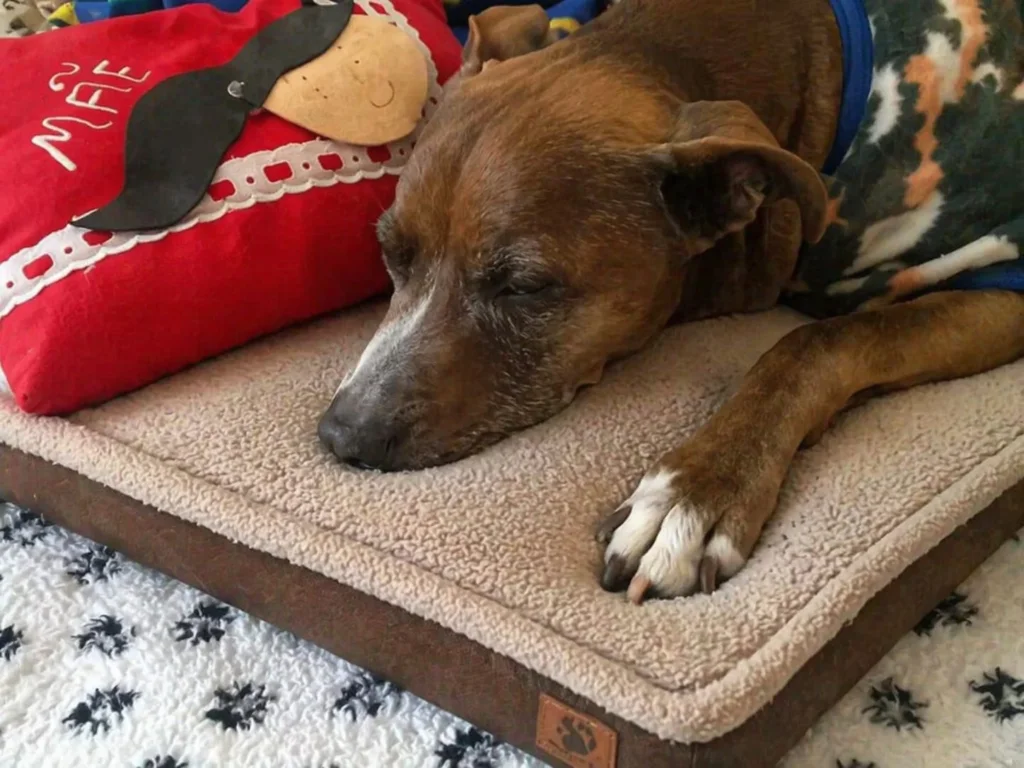
GOE during his moment of rest, with more support and comfort.
Types of Mattresses That May Enhance Comfort
Among the available alternatives, some stand out for better meeting the demands of aging:
Orthopedic beds with high-density foam;
Memory foam mattresses that adapt to the body’s shape;
Models with magnetic technology, in specific cases;
Structures that maintain stability and prevent deformation.
The choice should not be based solely on appearance, but on the actual ability to provide consistent support and comfort.
If you would like to view some mattress examples, you can explore available options that illustrate these differences in everyday use: https://amzn.to/4tCsPE2
Final Considerations
Aging brings a series of changes that need to be understood with attention. The place where a dog rests directly influences its mobility, comfort, and overall disposition throughout the day.
Adjusting this aspect does not simply mean replacing a bed, but reorganizing an important part of the daily routine. In many cases, simple changes lead to noticeable improvements in behavior and well-being.
Taking care of where a dog rests is, essentially, taking care of how it experiences this stage of life.
To continue this reflection, also check:
To better understand the differences between available models and how each adapts to different needs, it is worth observing some practical examples that help visualize these variations in everyday use.
If you would like to deepen this perspective, read also the related content about Loli’s experience with the magnetic mattress: https://logicalbark.com/magnetic-dog-bed-a-comfort-resource-tested-with-loli/
This content is for informational purposes only and does not replace the guidance of a veterinarian. The choice of beds or mattresses should consider the individual needs of each dog.
You may also like


Lusiane Costa is a digital writer with degrees in Marketing and English Literature.
Creator of Latido Lógico and Logical Bark, she develops evidence-based content on canine aging, wellness, and senior-dog health.
The project was inspired by Goe — a senior dog whose longevity and resilience shaped a grounded, compassionate view on the challenges of aging in pets.
Each article reflects her commitment to transforming real experiences into accessible knowledge, helping owners understand, prevent, and care better for their animals at every stage of life.
Goe remains the heartbeat of this project.