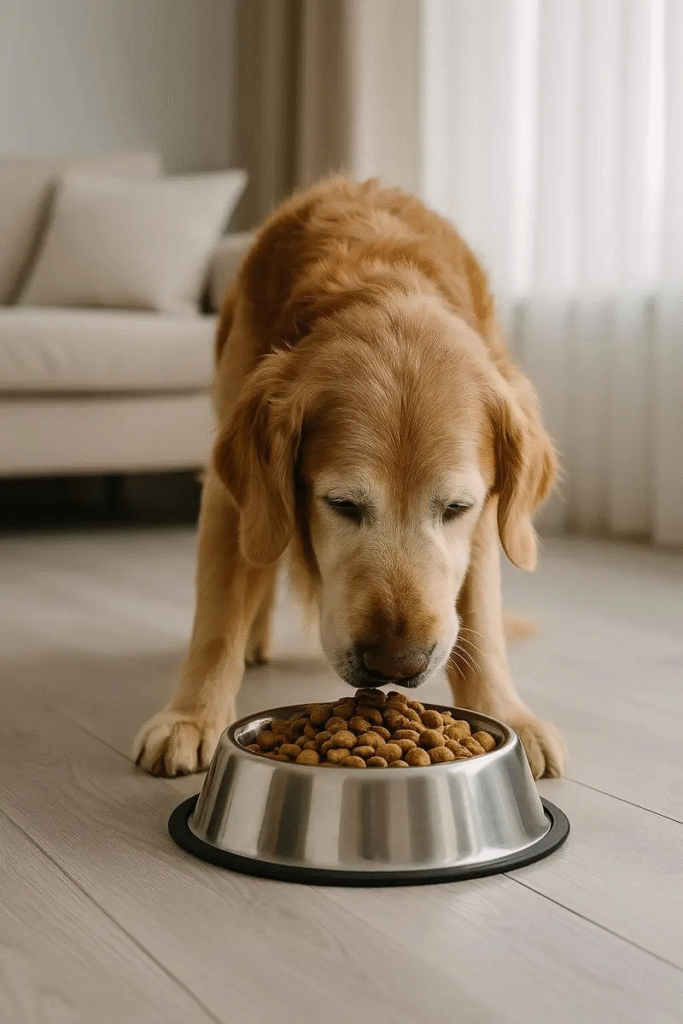
Close-up of a senior dog with adapted food, reflecting why senior dogs eat less with age.
Why do senior dogs eat less?
There are several reasons why senior dogs may show a decrease in appetite. Among the most common are:
- Slower metabolism: As dogs age, their bodies require less energy, which reflects in the amount of food they eat.
- Dental problems: Worn teeth, gum pain, or tartar buildup can make chewing more difficult.
- Chronic diseases: Senior dogs may develop kidney, heart, or liver problems that directly affect appetite.
- Hormonal or digestive changes: Natural changes in digestion and hormone production may reduce hunger.
⚠️ Attention: If the loss of appetite is accompanied by rapid weight loss, vomiting, diarrhea, or lethargy, it is essential to see a veterinarian.
How to stimulate your senior dog’s appetite
Even though reduced appetite can be natural, there are strategies to encourage your dog to eat better:
- Offer senior-specific food: These formulas are more palatable, softer, and contain nutrients tailored for this stage of life.
- Slightly warm up the food: Heating wet food or adding warm water to kibble enhances the aroma and stimulates appetite.
- Make meals smaller and more frequent: Instead of 2 large meals, divide into 3 or 4 smaller ones, making digestion easier.
- Include healthy treats in moderation: Shredded cooked chicken or steamed vegetables can make meals more attractive.
- Keep up with veterinary checkups: The vet can identify nutritional deficiencies or health problems affecting appetite. Check recommended dog foods → https://amzn.to/4mMfa9y
Extra care for senior dogs
In addition to food, senior dogs need a daily care routine to ensure quality of life:
Daily walks, even if shorter.
Cushions or orthopedic beds to protect joints.
Discover gentle and safe bed choices: https://amzn.to/4pStfVB
Suitable toys to stimulate the brain without excessive physical effort.
Regular veterinary exams to prevent silent diseases.
Related article → https://logicalbark.com/when-the-gut-of-senior-dogs-becomes-the-starting-point-lolis-experience/
Conclusion
Loss of appetite in senior dogs can be normal, but it deserves attention. With the right care and veterinary follow-up, this stage can be full of comfort, health, and joy for your companion.
As dogs age, their nutritional and behavioral needs change, and loss of appetite may become one of the most common signs. While it is normal for senior dogs to eat less, it is essential to observe how and when this change happens. A sudden or persistent reduction may indicate health conditions that require veterinary evaluation, such as gastrointestinal diseases, hormonal changes, joint pain, or even dental problems that make chewing difficult.
Another important factor is the slower metabolism, which reduces the body’s energy needs. In this sense, senior dogs eat less simply because they burn less energy in their daily lives. However, this does not mean that nutrition should be neglected. On the contrary: it is vital to choose high-quality food, specific for age, or even supplements that help maintain muscles, joints, and the immune system.
In addition, emotional aspects also influence appetite. Dogs experiencing changes in routine, absence of a close guardian, or the loss of companions may show discouragement and consequently eat less. In such cases, stimulating them with quiet walks, interactive toys, and daily affection can help improve overall well-being.
A practical strategy to help senior dogs that eat less is to divide food into smaller portions throughout the day. Slightly heating meals or opting for wet food can also make eating more attractive. Another tip is to ensure the feeding environment is calm, without stress or competition with other animals at home.
In summary, when senior dogs eat less, the attentive eye of the guardian is essential to distinguish what is part of the natural aging process and what may be a warning sign. With prevention, veterinary monitoring, and simple daily adjustments, it is possible to ensure a healthy, balanced, and happy life for pets in their senior years.
At Logic Bark, we know each step you take matters for your senior dog’s health and balance.

Senior Labrador eating less, showing lack of appetite at mealtime.

Lusiane Costa is a digital writer with degrees in Marketing and English Literature.
Creator of Latido Lógico and Logical Bark, she develops evidence-based content on canine aging, wellness, and senior-dog health.
The project was inspired by Goe — a senior dog whose longevity and resilience shaped a grounded, compassionate view on the challenges of aging in pets.
Each article reflects her commitment to transforming real experiences into accessible knowledge, helping owners understand, prevent, and care better for their animals at every stage of life.
Goe remains the heartbeat of this project.