April 7, 2026
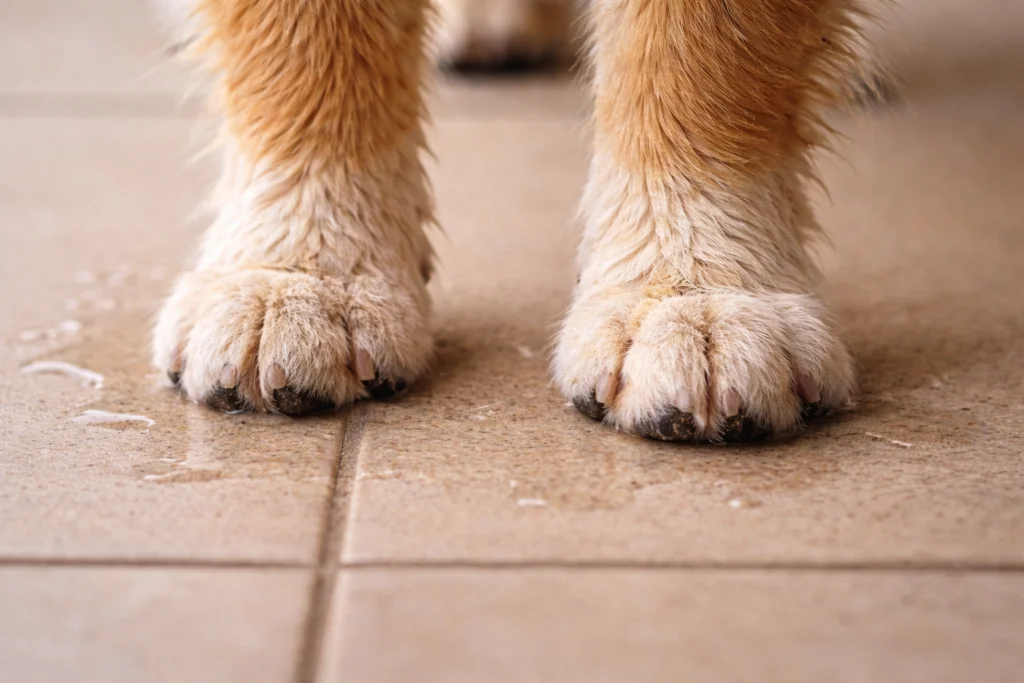
When dog paws are wet, proper drying helps preserve the health of the skin and paw pads.
Dog paws are highly specialized, essential for movement, protection, and interaction with the environment. More than support mechanisms, dog paws have anatomical and functional characteristics that reveal important aspects of health and behavior. Understanding these particularities not only helps you better understand the animal, but also improves daily care.
1. Dogs sweat through their paws
One of the most interesting facts is that dogs sweat mainly through their paw pads. This sweating can make dog paws slightly damp, especially in situations involving heat, excitement, or stress. For this reason, noticing wet dog paws does not always indicate a problem — in many cases, it is a natural physiological process.
However, this sweating is not the main mechanism of thermal regulation, since dogs predominantly use panting to dissipate heat.
2. Paw pads function as natural shock absorbers
Paw pads are thick and resilient structures that act as true shock absorbers, absorbing impact during movement and protecting joints and bones. This function is essential to preserve physical integrity, especially on uneven surfaces or during more intense activities.
In addition, these structures contribute to traction on the ground, offering greater stability during movement.
3. Paw size may indicate adult size
In puppies, proportionally large dog paws may suggest that the dog will reach a larger size in adulthood. Although this is not an absolute rule, this observation is often used as an empirical reference to estimate growth.
This characteristic is related to bone development and to body structure that is still forming.
4. Wet dog paws can have different causes
Wet dog paws can occur for several reasons, including sweating, contact with damp surfaces, frequent licking, or even dermatological changes. When the moisture is light and occasional, it tends to be considered normal. However, if it is persistent, has an odor, or is accompanied by discomfort, it deserves attention.
Observing frequency, intensity, and associated signs is essential to distinguish a physiological condition from a possible alteration.
5. Cleaning dog paws is an essential care measure
After walks, dog paws come into contact with dust, urban debris, chemical substances, and microorganisms. For this reason, proper cleaning helps preserve skin health and prevent irritation.
Cleaning can be done with water and products specifically designed for dogs, respecting the sensitivity of the area. Avoiding harsh products is essential so as not to compromise the skin barrier.
6. Knowing how to dry dog paws is just as important as cleaning them
After cleaning, careful drying is essential. Moisture buildup, especially between the toes, favors the proliferation of fungi and bacteria. The use of soft towels is recommended, with attention to the interdigital areas.
This simple care significantly reduces the risk of skin changes and future discomfort.
If you are interested in making this care more practical on a daily basis, there are alternatives that can make the process easier. Many pet guardians use paw cleaners, which help remove dirt quickly and efficiently, especially after walks. These tools contribute to a more even cleaning routine, without the need for more time-consuming procedures, making the routine of caring for dog paws simpler and more functional: https://amzn.to/4c6mvih
7. Changes in dog paws may indicate health problems
Dog paws also function as important indicators of overall health. Signs such as cracks, swelling, redness, strong odor, discharge, or sensitivity to touch may indicate anything from mild irritation to more complex conditions.
In addition, difficulty walking or changes in paw support may signal injuries, including possible fractures, which require immediate evaluation.
How to care for dog paws on a daily basis
Maintaining a routine of care for dog paws is essential to preserve well-being. This includes avoiding extremely hot surfaces, cleaning after walks when necessary, ensuring proper drying, and regularly observing the condition of the paw pads.
These practices help prevent discomfort, infections, and injuries, promoting quality of life and safety in movement.
Dog paws, often neglected, are complex structures that deserve continuous attention. Understanding their functions and needs allows for more conscious care aligned with dogs’ biological characteristics.
If you are interested in learning more about canine aging, this complementary content can help you better understand the changes that occur throughout this stage of life: https://logicalbark.com/what-is-aging-alongside-a-dog-for-16-years/
This content is for informational purposes only and does not replace the guidance of a veterinarian.
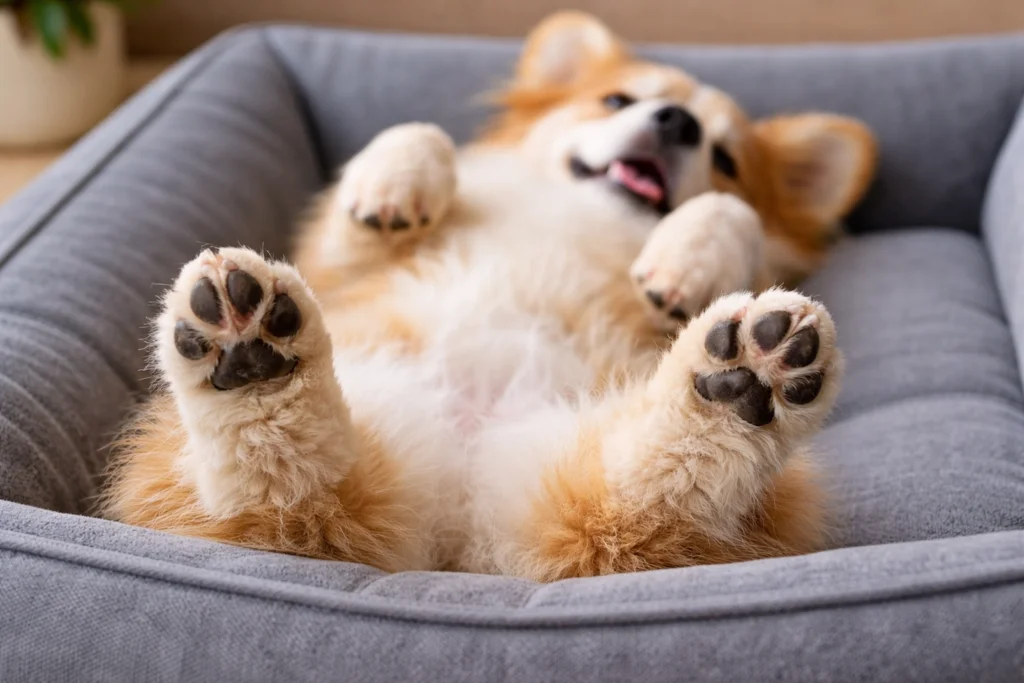
Paws up and calmness in the eyes — a sign of comfort and trust.
You may also like

Lusiane Costa is a digital writer with degrees in Marketing and English Literature.
Creator of Latido Lógico and Logical Bark, she develops evidence-based content on canine aging, wellness, and senior-dog health.
The project was inspired by Goe — a senior dog whose longevity and resilience shaped a grounded, compassionate view on the challenges of aging in pets.
Each article reflects her commitment to transforming real experiences into accessible knowledge, helping owners understand, prevent, and care better for their animals at every stage of life.
Goe remains the heartbeat of this project.