
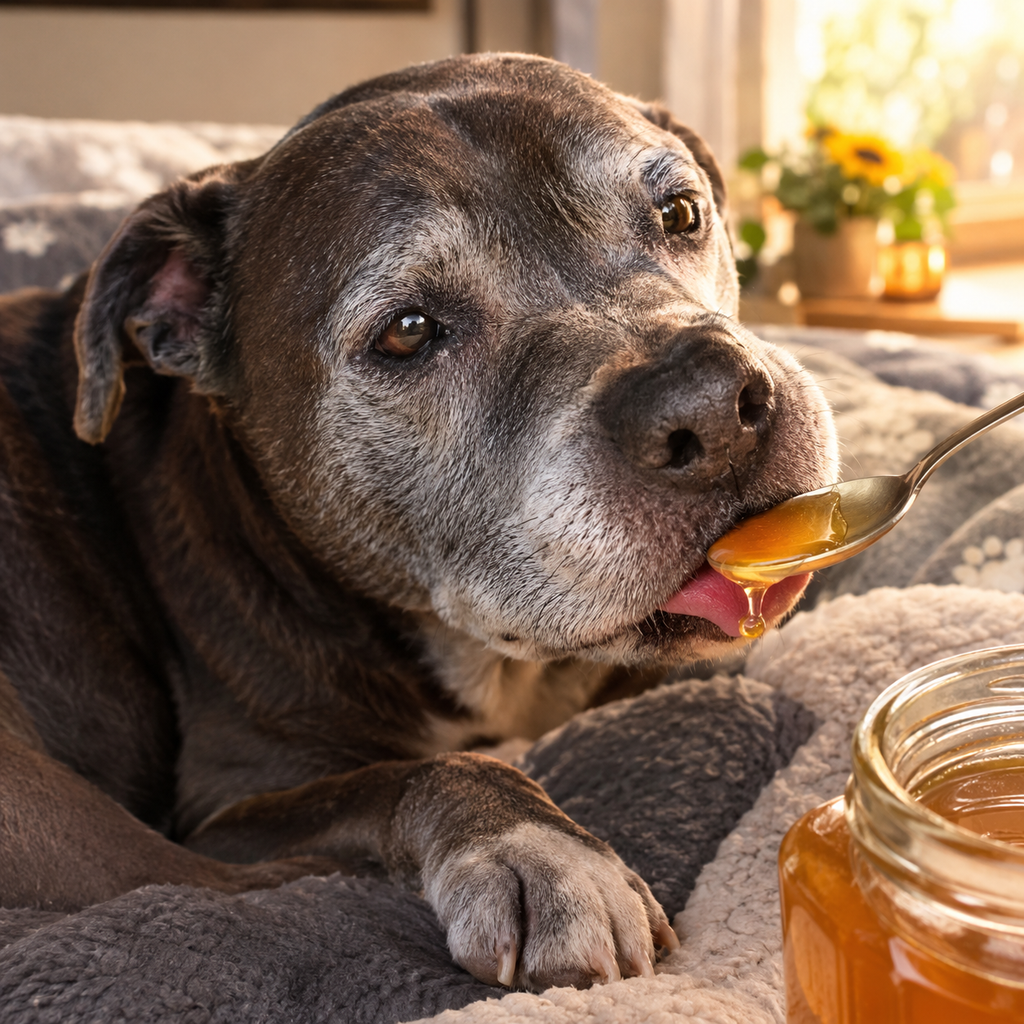
A spoonful of gold and health: pure honey is one of the 5 foods that help your senior dog modulate immunity and soothe silent inflammation.
The journey alongside a senior dog is marked by unconditional love and, just as much, by a growing need to adapt our daily care. As the years progress, the canine organism goes through a natural process of cellular wear, a decrease in metabolic efficiency, and a higher susceptibility to low-grade chronic inflammation. To reverse this scenario and provide a golden age filled with vitality, functional nutrition emerges as a powerful ally. Introducing specific natural ingredients into the diet can make all the difference in your faithful companion’s quality of life.
Next, we will explore 5 foods that help your senior dog keep their immune system strong, protect cognition, and ensure healthy, comfort-filled aging.
1. Pure honey: immune and intestinal support
Many pet parents think that offering a sweet treat is always harmful, but pure bee honey (offered with discernment) has surprising therapeutic properties. The correct recommendation is one teaspoon of pure honey, twice a week. It is worth noting that it should not be viewed merely as an ordinary treat; honey acts as a potent modulator of a pet’s health.
In a senior dog’s body, pure honey supports the immune system, helps restore the integrity of the intestinal mucosa, and acts directly to calm that silent inflammation that so often steals a dog’s years of life and energy. Its antimicrobial and prebiotic properties favor the intestinal microbiota, improving the absorption of essential nutrients. (Attention: avoid in diabetic dogs and always consult your veterinarian).
2. Frozen blueberries: the antioxidant shield for the mind
Frozen blueberries are a true nutritional powerhouse in canine geriatrics. Rich in anthocyanins and bioactive compounds, they function as a powerful natural antioxidant.
For the senior dog, frozen blueberries protect the brain against premature aging and support cognitive function, helping prevent what is known as “canine cognitive dysfunction syndrome” (the equivalent of human Alzheimer’s). In addition, because they are served frozen, they usually offer a refreshing and fun texture for pets, serving as a crunchy, low-calorie treat that is extremely beneficial in fighting the free radicals that accelerate tissue degeneration.
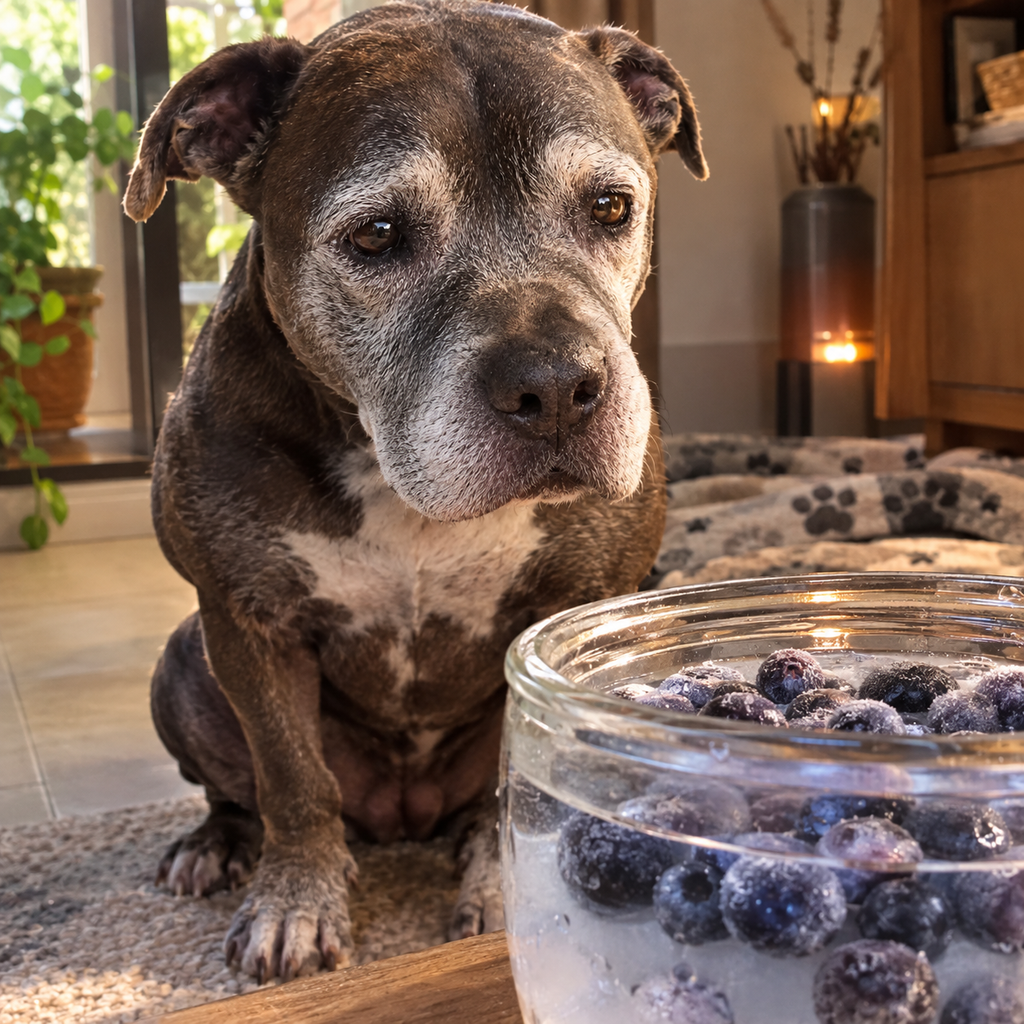
Curious gaze and protected mind: frozen blueberries are one of the 5 foods that help your senior dog preserve cognition and fight free radicals.
3. Boiled sweet potato: clean energy and balanced digestion
Boiled sweet potatoes are an excellent quality complex carbohydrate that brings countless benefits to senior dogs. Unlike ultra-processed grains, they provide clean fuel for the body, generating energy gradually without overloading the pancreas.
Rich in soluble and insoluble fibers, sweet potatoes actively support digestion, regulate intestinal transit, and prevent constipation episodes common in advanced age. Furthermore, they are a source of B-complex vitamins, potassium, and beta-carotene—fundamental nutrients for eye health and the maintenance of lean muscle mass that tends to decline with seniority.
4. Fresh parsley: much more than fresh breath
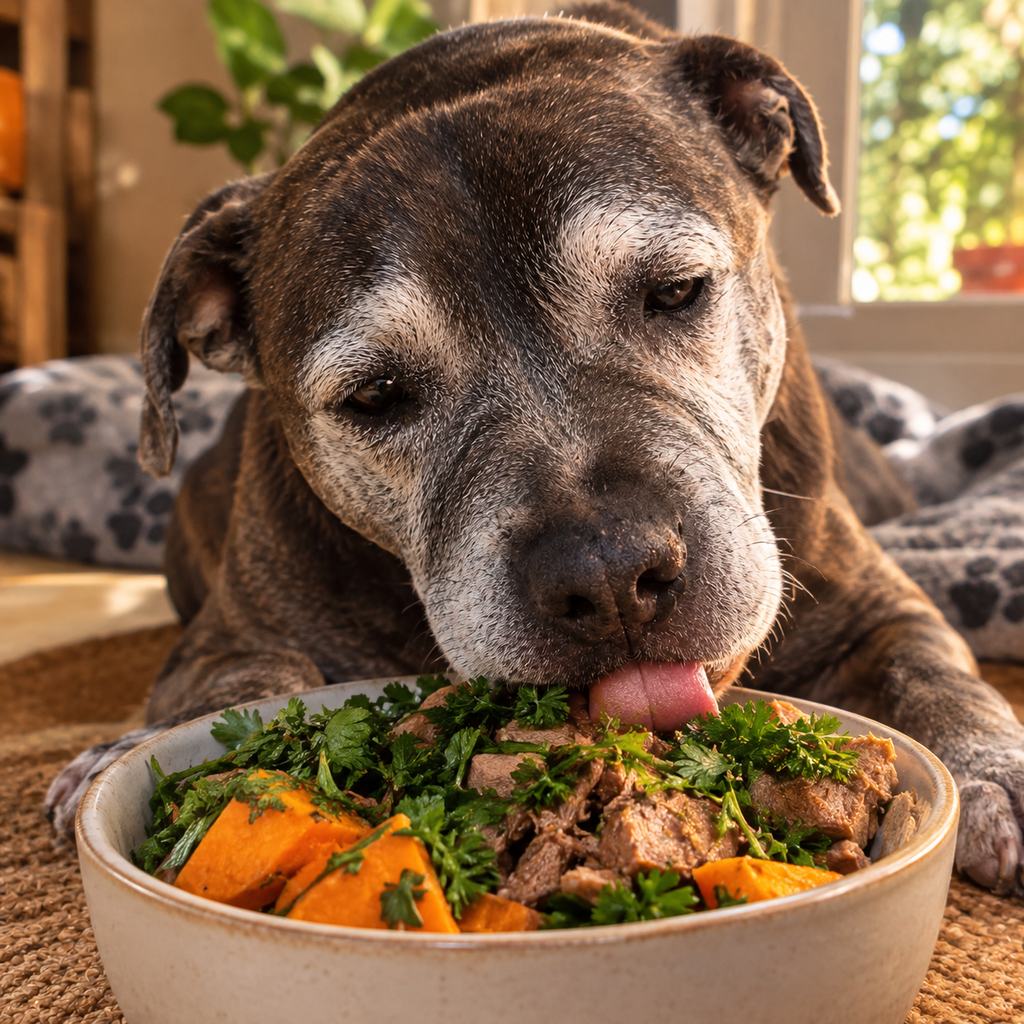
Clean fuel and well-being in every portion: sweet potatoes and fresh parsley are among the 5 foods that help your senior dog maintain balanced digestion and a lightly nourished body.
When thinking of fresh parsley, most pet parents believe its only function is to mask a dog’s unpleasant breath. However, this green herb conceals fascinating medicinal properties for canine old age.
Fresh parsley acts as an excellent natural diuretic, helping support kidney health and function, as well as aiding in toxin elimination and the body’s electrolyte balance. It is also rich in vitamins A, C, and K, along with anti-inflammatory flavonoids. Finely chopping it and mixing it into your pet’s food is a simple way to add nutritional value without drastically altering the flavor they love so much.
Smart preservation and the safety of homemade preparations
Maintaining a routine of natural feeding and supplementation requires not only affection, but also technical rigor in conserving ingredients and preparations. Using fresh herbs like parsley, for example, requires care so they do not lose their medicinal properties, just as proper storage of bone broth and therapeutic soups in the refrigerator or freezer is essential. For pet parents seeking practicality without compromising sanitary safety, investing in high-quality containers makes all the difference. An excellent example to organize portions and keep food fresh longer are glass or silicone airtight containers with reinforced sealing, ideal for locking out moisture and keeping nutrients intact. This meticulous organization ensures that every meal is always served fresh and with the maximum quality your companion deserves.
👉 To discover practical and safe storage models for your pet’s routine, check out this option, complementing the article: https://amzn.to/4rsTi6W
5. Bone broth: the elixir of collagen and recovery
Slow-cooked bone broth is, without a doubt, one of the greatest gifts you can give to a senior dog’s joints and digestive system. This preparation naturally extracts collagen, gelatin, essential amino acids (such as glycine and proline), and precious minerals from the bones.
The collagen produced by bone broth directly nourishes joint cartilage, easing the osteoarthritis pain so common in senior dogs. Moreover, the gelatin present in the broth seals the intestinal wall, improving digestion and reducing intestinal permeability. Of course, the preparation must be made without onions and without garlic—after all, everyone knows these seasonings are toxic to dogs and should never be used.
Practical experience in the routine with a senior dog
Caring for a senior dog demands dedication, but it also gifts us with moments of deep connection through daily care. In my personal experience with my dog Goe, I made extensive use of bone broth combined directly with fresh parsley in his feeding routine.
I prepared the bone broth with the utmost care, always remembering to make it without onions and garlic, and, right before serving, I would chop a little fresh parsley on top or mix it into the warm broth. This combination not only made the meal extremely flavorful and irresistible, but it also provided the joint support of collagen combined with the mild renal action of parsley.
Experiencing this routine in practice was essential, especially during more delicate moments. When Goe was going through a treatment and could not feed himself, we faced a true joint task force together. It was an act of care backed by strong support, fully guided by veterinarians, uniting the medical team’s technical rigor with my dedication as his pet mom (tutora). During this period when he needed nutritional support the most, I administered the diet using a syringe, preparing with all the zeal a special soup rich in sweet potatoes, essential supplements, and parsley. This comforting recipe was the fuel that sustained him and helped him regain his strength.
👉 Learn more about this subject in the related article below: Syringe Feeding for Senior Dogs: Care, Technique, and What I Learned with Goe
At the end of the day, knowing how to choose and use these 5 foods that help your senior dog goes far beyond nutrition: it is the result of a set of factors experienced through rigorous veterinary monitoring, combined with the discipline, patience, and unconditional zeal of the pet parent in every detail of life shared together.
After all, stories about care routines require a human vision that automated responses cannot copy.
Disclaimer: This article is strictly informative and educational in nature. It does not replace in any way the diagnosis, recommendation, or follow-up of a veterinarian. Each animal has metabolic and clinical individualities, and it is essential to consult a specialized professional before making any changes to your dog’s routine, environment, or diet.
You may also like


Lusiane Costa is a digital writer with degrees in Marketing and English Literature.
Creator of Latido Lógico and Logical Bark, she develops evidence-based content on canine aging, wellness, and senior-dog health.
The project was inspired by Goe — a senior dog whose longevity and resilience shaped a grounded, compassionate view on the challenges of aging in pets.
Each article reflects her commitment to transforming real experiences into accessible knowledge, helping owners understand, prevent, and care better for their animals at every stage of life.
Goe remains the heartbeat of this project.