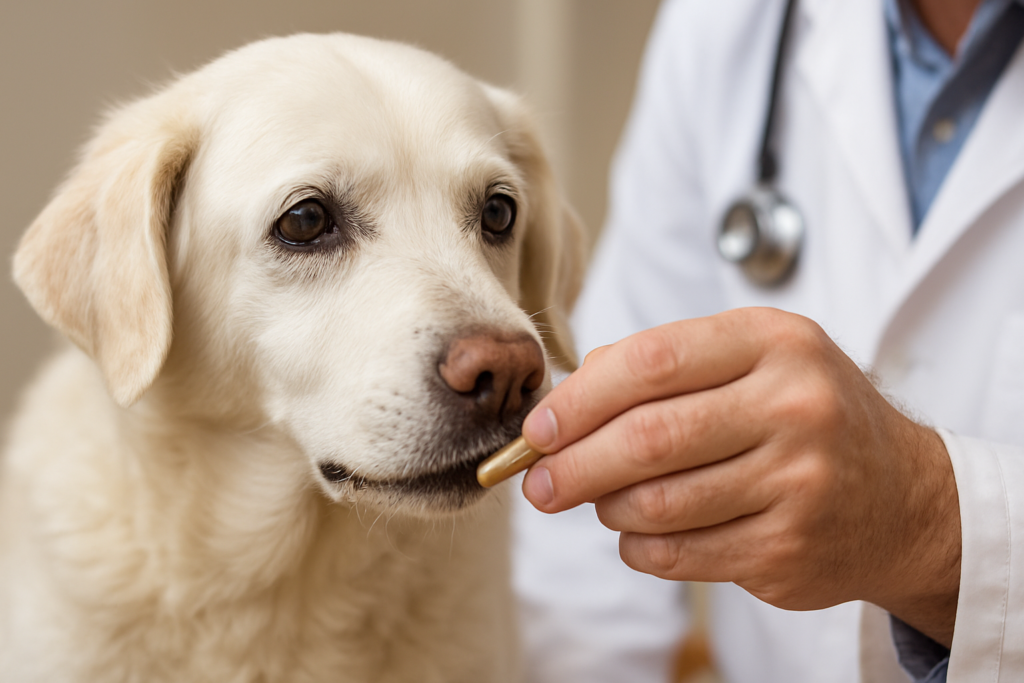
Prednisone for senior dogs: prevention, treatment, and veterinary care
Important: Prednisone for senior dogs is a prescription-only medication and must be used exclusively under veterinary guidance. It should never be administered without professional evaluation, especially in elderly or medically fragile dogs.
As dogs age, it is common for them to develop inflammatory conditions, joint pain, immune-related disorders, or to require medical support during recovery from surgical procedures. In these situations, veterinarians may prescribe medications such as prednisone for senior dogs, a corticosteroid widely used in the United States as part of controlled and carefully monitored treatment plans.
This article explains what prednisone is, how it works in senior dogs, when it is typically prescribed, which precautions are essential, and how it was responsibly used in the care of an elderly dog named Goe following a major surgical procedure.
What Is Prednisone for Senior Dogs?
Prednisone is a synthetic corticosteroid commonly used in veterinary medicine. It mimics cortisol, a hormone naturally produced by the adrenal glands, and has powerful anti-inflammatory and immunosuppressive effects.
In senior dogs, prednisone is prescribed to help manage conditions such as inflammation, swelling, immune system overactivity, and post-surgical recovery. Because aging dogs often have reduced physiological reserves, its use requires precise dosing and close veterinary supervision.
The primary actions of prednisone include:
- Reducing inflammation and tissue swelling
- Suppressing excessive immune responses
- Relieving pain associated with inflammatory conditions
- Supporting recovery after major surgical interventions
When Is Prednisone Prescribed for Senior Dogs?
Veterinarians may recommend prednisone for senior dogs in several clinical scenarios, always after careful evaluation. Common indications include:
- Arthritis and degenerative joint disease
- Post-operative inflammation following major surgeries
- Autoimmune disorders
- Severe allergic or inflammatory skin conditions
- Neurological or spinal inflammation
- Certain gastrointestinal inflammatory diseases
In elderly dogs, recovery tends to be slower, and inflammation can significantly impact comfort and mobility. In these cases, prednisone can play a supportive role when used appropriately.
Prednisone Use After Surgery in Senior Dogs
One of the most common and clinically accepted uses of prednisone for senior dogs is during the post-operative period following major surgery. Surgical trauma naturally triggers inflammation, and in older dogs, this response may be more intense or prolonged.
When prescribed as part of a post-surgical protocol, prednisone helps control inflammatory reactions, reduce swelling, and improve overall comfort during recovery. This use is temporary, carefully dosed, and always time-limited.
How Prednisone Was Used in Goe’s Care
In Goe’s case, prednisone was prescribed after a major surgical procedure as part of his veterinary-directed post-operative care plan. At that time, Goe was already a senior dog, and the goal was to support his body during recovery by controlling inflammation and promoting comfort.
The medication was administered strictly according to veterinary instructions. It was not used to treat wounds directly, nor was it related to later complications. Instead, prednisone was introduced at discharge as a standard component of recovery management, reflecting common veterinary practice in complex surgical cases involving older dogs.
This experience illustrates an important point: prednisone for senior dogs is not a casual or routine medication, but rather a targeted tool used when the clinical benefits outweigh the risks — and only under professional supervision.
Potential Side Effects and Monitoring
Like all corticosteroids, prednisone may cause side effects, particularly if used for extended periods. Senior dogs are more sensitive, which makes monitoring essential.
Possible side effects include:
- Increased thirst and urination
- Increased appetite and weight gain
- Muscle weakness with prolonged use
- Changes in liver enzyme levels
- Increased susceptibility to infections
For this reason, veterinarians aim to use the lowest effective dose for the shortest necessary duration. Regular follow-up appointments and blood tests may be recommended.
Can Prednisone Be Combined With Other Supportive Care?
Yes. In many cases, prednisone is part of a broader care plan. Veterinarians may recommend combining it with complementary strategies such as:
- Omega-3 supplementation to support joint health
- Physical therapy or gentle rehabilitation exercises
- Environmental adaptations to reduce strain
- Carefully planned nutrition for senior dogs
Explore this practical solution →https://amzn.to/44nMRYF
See complementary information →https://logicalbark.com/natural-supplements-to-strengthen-senior-dogs-joints/
These measures help minimize reliance on medication while supporting overall well-being.
Is Prednisone Safe for Senior Dogs?
Prednisone can be safe and effective for senior dogs when used correctly. Problems typically arise only when it is administered without veterinary guidance, used for excessive durations, or given at inappropriate dosages.
Responsible use, clear communication with the veterinarian, and close observation of the dog’s response are essential for maintaining safety.
Conclusion
Prednisone for senior dogs is a powerful medication that plays an important role in managing inflammation, pain, and post-surgical recovery when prescribed appropriately. It is not a medication to be feared — nor one to be used casually.
In cases like Goe’s, prednisone served as a temporary, carefully controlled support during recovery from major surgery, reflecting responsible veterinary practice. With proper supervision, informed caregivers, and complementary care strategies, prednisone can contribute to a more comfortable and dignified aging process for senior dogs.

A senior dog resting comfortably after treatment

Lusiane Costa is a digital writer with degrees in Marketing and English Literature.
Creator of Latido Lógico and Logical Bark, she develops evidence-based content on canine aging, wellness, and senior-dog health.
The project was inspired by Goe — a senior dog whose longevity and resilience shaped a grounded, compassionate view on the challenges of aging in pets.
Each article reflects her commitment to transforming real experiences into accessible knowledge, helping owners understand, prevent, and care better for their animals at every stage of life.
Goe remains the heartbeat of this project.