
In a dog’s sleep lives the careful devotion of the one who cares.
As the years go by, a dog’s sleep changes — and so do their resting habits. It is natural for a senior dog to spend more time lying down, sleep more during the day, and take a little longer to recover from simple activities. But after all, how many hours does a senior dog sleep per day? And how can you tell if that sleep is truly healthy?
In this article, we’ll explain what is normal, what deserves attention, and how to ensure comfort and good-quality rest for your best friend.
🐶 1. How many hours should a senior dog sleep per day?
On average, a senior dog sleeps between 16 and 20 hours per day.
Sleep tends to be more fragmented — they sleep for a while, wake up, change position, and fall asleep again. This variation happens because, with aging, the metabolism slows down and the body needs more time to recover.
- Large-breed dogs (such as Labradors or Golden Retrievers) usually sleep more than small dogs because they tire more easily.
- Small-breed dogs (such as Maltese or Poodles) tend to alternate more between short naps and periods of wakefulness.
The most important thing is to notice whether your dog sleeps well and wakes up reasonably alert. If they sleep a lot and remain lethargic, it may be a sign of pain, weakness, or medication effects.
💤 2. Common sleep changes in canine old age
Aging brings physical and neurological changes that directly affect sleep. The most common include:
- Joint pain (osteoarthritis, dysplasia, arthritis);
- Hormonal problems (such as hypothyroidism);
- Cognitive dysfunction — similar to human dementia;
- Less physical activity;
- Side effects of medications.
These factors make dogs sleep more, but not always with good quality. That’s why it is essential to create a welcoming, calm, and comfortable environment.
🛏️ 3. The role of the bed and environment in a senior dog’s sleep
The bed is the most important place for a dog’s rest.
For senior dogs, orthopedic beds are the most recommended — they reduce pressure on the joints, keep the body aligned, and help prevent pressure sores.
Look for models with memory foam, a non-slip base, and washable covers.
Check out options that make daily life with senior and sensitive dogs easier.
A good orthopedic bed brings real comfort to senior dogs — it eases joint pressure, protects sensitive skin, and helps them rest without discomfort. Soft, supportive materials allow the body to relax, restore energy, and sleep more peacefully: https://amzn.to/4os6tlp
Also:
- Keep the environment at a comfortable temperature;
- Avoid drafts or very cold floors;
- Place the bed in a quiet spot, away from loud noises and heavy foot traffic.
Tip: A canine pheromone diffuser can help anxious senior dogs sleep better.
Learn how canine pheromones can help: https://amzn.to/3Y5SFCo
“Small, consistent choices make a big difference in a senior dog’s routine. A calm environment, attentive care, and gentle calming solutions help promote truly restorative sleep.”
🌞 4. Goe’s sleep pattern: a real-life example
Goe is a senior dog who is going through a recovery period after a veterinary biopsy.
In recent weeks, he has been sleeping more during the day and becoming a bit more active in the late afternoon, which is common in older dogs whose biological rhythm is changing.
Because of his age and ongoing treatments — including the use of gabapentin, a medication that helps control neurological and joint pain — he sleeps around 18 hours per day.
This amount is considered normal, especially because sleep helps the body regenerate, reduce inflammation, and maintain emotional balance.
At night, Goe sometimes wakes up, stands up, and changes position, looking for cooler and more comfortable spots close to me.
In addition, because his bladder is less elastic, he often wakes up around three or four in the morning, and I need to get up and help him urinate.
These nighttime awakenings are part of normal aging and should not be a cause for concern as long as the dog keeps eating, interacting, and behaving more or less as usual during the day.
Related article: https://logicalbark.com/gabapentin-for-senior-dogs-experience-with-goe-and-essential-information/

Between light dreams, Goe finds rest and serenity.
🌙 5. When can excessive sleep signal a problem?
Although sleeping a lot is expected in old age, there are situations where excessive sleep deserves investigation. Talk to your veterinarian if your dog:
- Sleeps almost all day and ignores stimuli;
- Snores very loudly or seems to have breathing pauses;
- Has difficulty getting up;
- Seems disoriented upon waking;
- Shows irritability and loss of appetite.
These signs may indicate chronic pain, hormonal changes, or even heart disease.
❤️ 6. Tips to improve sleep quality
- Maintain a regular routine: consistent times for meals, short walks, and rest;
- Avoid loud noises and bright lights at night;
- Do not move the bed around too often;
- Include gentle daytime activities (short walks, scent games, simple enrichment);
- Offer a balanced diet — including omega-3 and natural antioxidants that support the nervous system.
🐾 7. Conclusion
Knowing how many hours your senior dog should sleep is more than a curiosity — it is an essential part of caring for their health and well-being.
Sleeping well strengthens the immune system, improves mood, and helps the body recover.
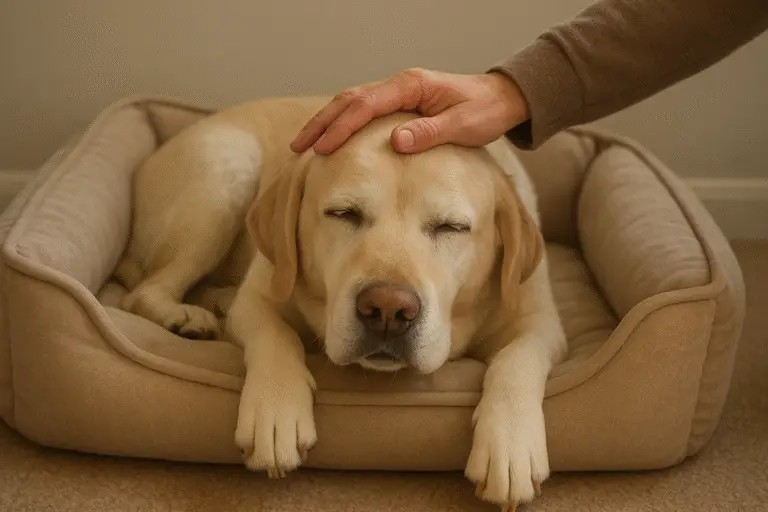
Your care reflects the peace and rest your senior dog needs.

Lusiane Costa is a digital writer with degrees in Marketing and English Literature.
Creator of Latido Lógico and Logical Bark, she develops evidence-based content on canine aging, wellness, and senior-dog health.
The project was inspired by Goe — a senior dog whose longevity and resilience shaped a grounded, compassionate view on the challenges of aging in pets.
Each article reflects her commitment to transforming real experiences into accessible knowledge, helping owners understand, prevent, and care better for their animals at every stage of life.
Goe remains the heartbeat of this project.